Electrician Hourly Pay in Columbus, NE: $26.51 (2026)
Quick Answer:Hourly pay for a electrician working in Columbus, NE runs $26.51 at the median for 2026 — annualizing to $55,136 at a standard 2,080-hour year. Figures projected from BLS OEWS 2025 (SOC 47-2111). Weighted against Columbus's regional price level (BEA RPP 91.5, 8% below national), each hour of work buys what $28.97 nationally would. A 24-hour part-time schedule grosses $33,085 per year.
Based on BLS state-level estimates · View source
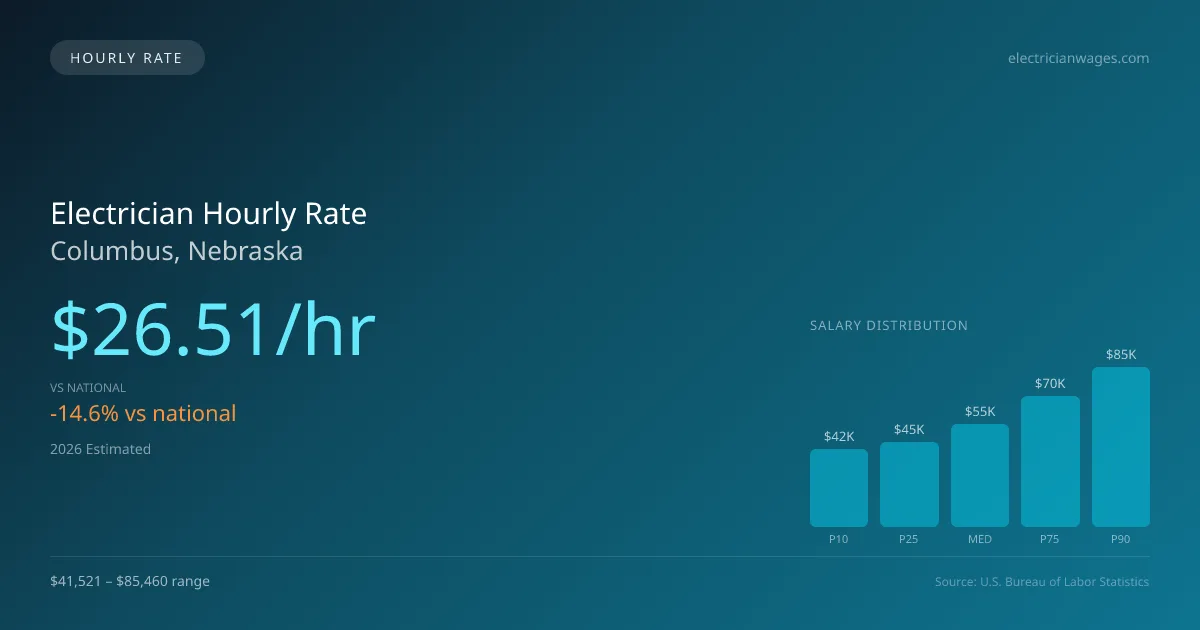
Electricians in Columbus, Nebraska, can expect to earn a median hourly rate of $26.51 in 2026. This figure falls short of the national hourly median of $31.02, indicating that the local market provides lower compensation compared to broader trends across the country. For those working part-time, such as three days a week, this hourly rate can transform into a viable annual income, especially for individuals managing residential service calls or supporting industrial projects. Within the local market, electricians in Columbus have the potential to earn between $19.96 and $41.08 per hour, accommodating both entry-level positions and experienced professionals. It's essential to understand that these estimates have been derived from annual salary data, providing a valuable framework for those navigating their career in the electrical field.
About the Columbus Market
Salary estimated from Nebraska average ($60,000) adjusted for local cost of living.
Electrician Hourly Wage Breakdown
| Percentile | Hourly Rate | Per 8hr Shift |
|---|---|---|
| Entry Level (P10) | $19.96 | $159.72 |
| Lower Range (P25) | $21.86 | $174.91 |
| Median (P50) | $26.51 | $212.08 |
| Upper Range (P75) | $33.53 | $268.21 |
| Top Earners (P90) | $41.08 | $328.66 |
Estimated Annual Income by Work Schedule in Columbus
Based on $26.51/hr median hourly rate · 2026 est.
At $26.51/hr, a electrician working full-time (40 hr/wk) in Columbus, NE can expect to earn approximately $55,142 per year (2026 est.). Part-time hygienists working 24 hours per week would earn around $31,812. With a cost-of-living index of 91.50 (below the national average), these earnings stretch further in Columbus.
Hourly Rate Calculator
Schedule Comparison in Columbus
| Schedule | Weekly | Monthly | Annual |
|---|---|---|---|
| Full-Time (40 hrs) | $1,060.41 | $4,595 | $55,142 |
| Part-Time (24 hrs) | $636.25 | $2,757 | $33,085 |
| Per Diem (16 hrs) | $424.17 | $1,838 | $22,057 |
Compare ELEC Wages With Similar Roles
| Role | Median Hourly |
|---|---|
| Electrician (Columbus) | $26.51 |
| Plumber (National Avg) | $32.85 |
| HVAC Technician (National Avg) | $28.47 |
| Industrial Machinery Mechanic (National Avg) | $29.53 |
| Solar PV Installer (National Avg) | $24.85 |
Electricians in Columbus, NE earn a median of $55,136 per year (2026 est.), which is 14.56% lower than the national median of $64,530 and 6.60% below the Nebraska state average of $59,032.
Electrician Hourly Pay vs. Cost of Living
Working 24h/week at $26.51/hr = $33,085/year (purchasing power: $36,158).
Working 40h/week (full-time) = $55,142/year (purchasing power: $60,264).
CoL index: 91.5 (100 = national average). Your dollars stretch further here.
2019 BLS Actual
$23.08/hr
2025 BLS Actual
$25.96/hr
2026 Current Est.
$26.51/hr
2019–2027 Growth
+17.3%
Hourly Rate Trajectory for Electricians in Columbus (2019–2027)
2019–2025: actual BLS OEWS data for this metro area. 2026+: CAGR 2.12% projection.
| Year | Hourly Rate | Status |
|---|---|---|
| 2019 | $23.08/hr | Actual |
| 2020 | $23.38/hr | Actual |
| 2021 | $24.67/hr | Actual |
| 2022 | $24.75/hr | Actual |
| 2023 | $25.30/hr | Actual |
| 2024 | $24.65/hr | Actual |
| 2025 | $25.96/hr | Actual |
| 2026(current) | $26.51/hr | Estimated |
| 2027 | $27.07/hr | Projected |
Based on 7 years of BLS OEWS metropolitan area data, the median hourly rate for electricians in Columbus grew 12.5% from $23.08/hr (2019) to $25.96/hr (2025). At a 2.12% projected growth rate, hourly pay is expected to reach $27.07/hr by 2027. Part-time and per-diem electricians can use this multi-year trend to benchmark future contract negotiations.
Note: Historical values (2019–2025) are actual BLS OEWS figures for the Columbus metropolitan area, sourced from annual Occupational Employment and Wage Statistics surveys. 2026–2026 figures are current estimates, and 2027 values are projections, calculated using a 2.12% CAGR derived from 7-year BLS historical data. Actual salaries may vary based on employer, experience, certifications, and local market conditions.
Working as an Hourly Electrician in Columbus
When considering part-time earnings, a Columbus electrician working 24 hours a week can expect to take home around $33,073 annually, significantly less than a full-time counterpart. Many electricians also engage in per-diem work, significantly boosting their earnings potential, which can reach between $80 and $150 per day for out-of-town projects, on top of their hourly wage of $35 to $60. Additionally, specialized roles such as industrial PLC technicians can command rates from $80 to $140 per hour on a contract basis. Employer types directly influence pay scales; for example, union electricians affiliated with IBEW typically earn 30-50% more than their non-union counterparts and enjoy full benefits and pensions. As electricians weigh the trade-offs between hourly wages and benefits, those seeking negotiation power can leverage their skills and certifications, especially in light of the strong demand in niches like data center work, solar installations, and industrial electrical maintenance.
More salary data for Columbus, NE:
Frequently Asked Questions
What is the hourly rate for electricians in Columbus in 2026?
How much do part-time electricians make in Columbus?
Are electricians in Columbus paid hourly or salary?
How much does a full-time electrician make per year in Columbus?
Do electricians earn more per hour working part-time in Columbus?
Related Pages
Compare Salaries
Career Resources
Nearby Cities in Nebraska
Written by Samuel Carter, Career Analyst
Career Analyst
Samuel Carter has over 10 years of experience as an electrician. His focus includes residential wiring and safety standards. He has worked in various construction firms.
Methodology & Data Source
Hourly wage figures on this page are 2026 projections based on the Bureau of Labor Statistics Occupational Employment and Wage Statistics (OEWS) survey, May 2026 release. A 2.12% compound annual growth rate (CAGR), derived from 6-year national BLS wage trends, was applied to estimate current 2026 hourly rates for electricians in Columbus. Part-time and full-time income estimates assume consistent weekly hours and do not account for overtime, benefits, or seasonal variation.
Data Sources & Methodology
Salary data for Columbus is estimated from official BLS state-level occupational wage data (2025), adjusted for regional cost-of-living differences using BEA RPP (Regional Price Parities).
2026 figures are projected from 2025 BLS data using a compound annual growth rate (CAGR) of 2.12%, derived from historical BLS wage trends for electricians (SOC 47-2111).
Compiled and verified by Samuel Carter, Career Analyst, a licensed electrician with 10+ years of clinical experience. · View source data at BLS.gov